
A powerful gaming computer should deliver smooth performance, sharp visuals, and reliable frame rates without forcing players to lower graphics settings. For gamers who want a high-quality experience without moving to a 4K monitor, 1440p resolution is an excellent choice. It offers more detail than 1080p while remaining easier to run than 4K in many demanding games. 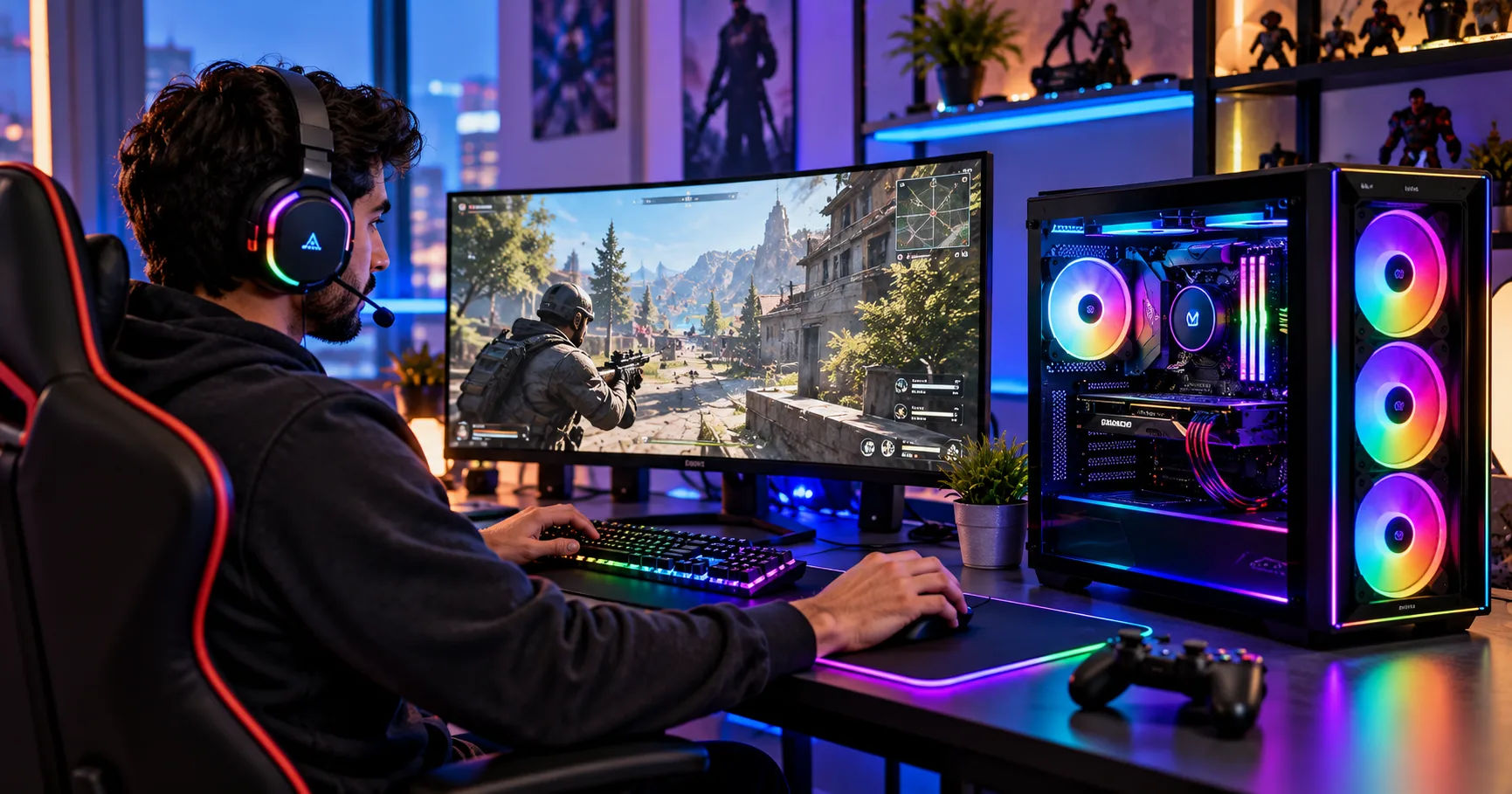 This makes choosing the right graphics card especially important.
A nvidia 5080 gaming pc is a premium option for players who want excellent performance at 1440p. With a powerful graphics card, a suitable processor, and enough memory, this type of gaming system can handle demanding modern titles, high refresh rates, and advanced graphics features. It can also provide extra performance for streaming, video editing, and other intensive tasks.
The important question is whether this level of hardware is worth the investment when your main target is 1440p gaming. The answer depends on the games you play, your monitor's refresh rate, your preferred graphics settings, and whether you plan to upgrade your display in the future. Understanding these factors will help you decide if this high-end system is the right fit for your needs.
1440p Gaming
1440p gaming refers to playing games at a resolution of 2560 × 1440 pixels. It is commonly called QHD or Quad HD and sits between Full HD (1920 × 1080) and 4K (3840 × 2160).
This resolution provides a noticeable improvement in image clarity compared with 1080p. Textures look sharper, distant objects are easier to distinguish, and detailed environments appear more realistic. These improvements are particularly noticeable on monitors measuring 27 inches or larger.
However, 1440p also requires more graphics processing power than 1080p. A graphics card must render approximately 3.7 million pixels per frame at 1440p, compared with approximately 2.1 million at 1080p. That difference makes GPU performance an important consideration.
For many gamers, 1440p represents a practical balance between image quality and performance. It allows players to enjoy detailed graphics without the substantial processing demands associated with 4K gaming.
Why Refresh Rate Matters
Resolution is only one part of the gaming experience. Refresh rate also affects how smooth games appear during movement.
A 60Hz monitor refreshes its image 60 times per second, while a 144Hz monitor can refresh up to 144 times per second. Monitors with 165Hz, 180Hz, 240Hz, or higher refresh rates are also popular among competitive players.
A powerful graphics card becomes particularly valuable when you want to combine high visual quality with a high refresh rate. It can help you achieve higher frame rates in supported games, although actual performance depends on the game, processor, graphics settings, and other system components.
How Powerful Is an NVIDIA RTX 5080 for 1440p?
The NVIDIA GeForce RTX 5080 is a high-end graphics card designed for demanding gaming and other GPU-intensive workloads. Based on NVIDIA's Blackwell architecture, it offers substantial rendering power, modern ray-tracing capabilities, and support for advanced AI-assisted graphics technologies.
For 1440p gaming, this level of performance provides considerable flexibility. Instead of choosing between high visual quality and smooth gameplay in every demanding title, players have more room to adjust settings according to their preferences.
High Frame Rates in Modern Games
Many modern games can run at high frame rates on a well-configured RTX 5080 system at 1440p. Less demanding games may deliver frame rates that take advantage of high-refresh-rate monitors, while visually complex games may require more careful settings adjustments.
Competitive titles such as esports shooters often prioritize responsiveness over cinematic graphics. Meanwhile, story-driven adventures and open-world games may benefit more from detailed textures, realistic lighting, and complex environments.
A high-end graphics card is well suited to both categories. However, frame rates are never guaranteed by the GPU alone. Your processor, game engine, memory configuration, and background applications can all influence the final result.
Advanced Ray Tracing
Ray tracing simulates how light interacts with objects and surfaces. It can improve reflections, shadows, and global illumination, making game environments appear more realistic.
These effects can be demanding, particularly when several ray-tracing features are enabled simultaneously. The RTX 5080 provides strong hardware support for this type of rendering, making it an attractive option for players who enjoy visually impressive games.
At 1440p, you can often experiment with demanding lighting settings while maintaining a responsive experience. Nevertheless, the most intensive ray-tracing workloads may still benefit from DLSS, adjusted settings, or frame generation.
DLSS and AI-Assisted Performance
NVIDIA's Deep Learning Super Sampling technology, commonly called DLSS, uses AI-assisted techniques to improve performance and image quality in supported games.
Depending on the game and available features, DLSS can render a game internally at a lower resolution and reconstruct a higher-resolution image. This can reduce the graphics workload while maintaining an attractive picture.
The RTX 5080 also supports DLSS 4 features, including Multi Frame Generation in compatible games. These technologies can increase displayed frame rates significantly, but the results depend on game support and settings.
It is important to distinguish generated frames from frames rendered directly by the GPU. Frame generation can make movement appear smoother, but it does not provide the same responsiveness as an equivalent increase in traditionally rendered frame rates. Competitive players should consider input latency alongside the displayed FPS.
Expected Gaming Performance at 1440p
The performance of a gaming computer depends on more than its graphics card model. Two computers using the same GPU can deliver different results because of differences in processors, cooling, memory, power settings, and game configurations.
A system equipped with an RTX 5080 should generally be capable of excellent 1440p performance. However, exact frame rates vary widely between games, so it is better to evaluate performance by gaming category rather than expect one number to apply everywhere.
Competitive Multiplayer Games
Competitive games often place a high priority on low latency and consistent frame rates. Popular shooters and esports titles can be less demanding than modern cinematic games, although their performance requirements differ.
With a suitable processor, a powerful GPU can provide plenty of performance for high-refresh-rate 1440p gaming. This makes the system attractive to players using 165Hz, 180Hz, or 240Hz displays.
At very high frame rates, the processor may become the limiting component. A stronger GPU does not automatically improve performance if the CPU cannot prepare frames quickly enough.
For competitive gaming, choose a processor with strong gaming performance, keep unnecessary background applications under control, and use appropriate graphics settings to prioritize responsiveness.
AAA Games With High Graphics Settings
Modern AAA games often include detailed textures, expansive environments, complex animations, and advanced lighting. These features can put considerable pressure on both the graphics card and processor.
A high-end RTX 5080 computer offers plenty of headroom for running many of these games at 1440p with high or ultra settings. Still, some exceptionally demanding games may require compromises to maintain a preferred frame rate.
The best approach is to adjust the settings that have the greatest performance impact. For example, reducing certain ray-tracing options or shadow settings may improve performance without dramatically changing the overall appearance.
Gaming With Ray Tracing Enabled
Ray tracing can make demanding games more visually impressive, but its performance cost varies substantially.
An RTX 5080 system provides a strong foundation for experimenting with these effects at 1440p. Players who want both advanced lighting and high frame rates should test DLSS options and individual graphics settings rather than assume every feature can be enabled at maximum quality without compromise.
The objective is to find a balance between visual detail, smooth motion, and responsive controls.
Is an NVIDIA 5080 Gaming PC Overkill for 1440p?
nvidia 5080 gaming pc this computer is overkill depends on how you use it.
For someone who plays casual games on a 60Hz monitor, an RTX 5080 may provide considerably more performance than necessary. A less expensive graphics card could deliver a satisfying experience while leaving money available for a better monitor, additional storage, or other accessories.
However, the situation changes for players who want premium graphics and high frame rates simultaneously.
When the Extra Power Makes Sense
An RTX 5080 system is particularly appealing if you:
-
Play demanding AAA games at high or ultra settings.
-
Use a 165Hz, 180Hz, or 240Hz 1440p monitor.
-
Prefer ray tracing and other advanced graphics features.
-
Stream games while running additional applications.
-
Want to keep a computer for several years.
-
Expect to move to 4K gaming in the future.
These benefits can justify the investment for enthusiasts who value performance and flexibility.
When a Less Expensive PC Is Better
A more affordable system may be the smarter choice if you mainly play lightweight games, use a standard 60Hz monitor, or have a limited budget.
It may also make sense if your preferred games are limited by the processor rather than the GPU. In that situation, investing in a balanced system can deliver better practical results than spending most of your budget on the graphics card.
The goal should not be to buy the most expensive hardware available. It should be to buy hardware that matches your actual gaming requirements.
Choosing the Right Processor for an RTX 5080
The processor is one of the most important components to consider when building or buying a high-end gaming computer.
At 1440p, the RTX 5080 can render frames quickly enough that the CPU becomes a limiting factor in certain games. This is especially common in competitive titles, simulation games, strategy games, and open-world experiences with many active characters or complex calculations.
Which CPU Should You Choose?
A modern high-performance gaming processor is a sensible match for this graphics card. AMD Ryzen X3D processors are worth considering because their large cache can improve gaming performance in many CPU-sensitive titles. Suitable high-end Intel processors can also deliver excellent results.
The right choice depends on your budget, preferred games, motherboard platform, and whether you also perform productivity tasks.
Avoid pairing a premium graphics card with an outdated or underpowered processor unless you understand the limitations. A balanced system helps the graphics card perform closer to its potential.
Can a CPU Bottleneck Affect 1440p Gaming?
Yes. A CPU bottleneck occurs when the processor cannot supply work to the GPU quickly enough to maintain the desired frame rate.
For example, a game may run at a very high frame rate in one scene but slow down when many characters, physics calculations, or background activities appear. This can happen even when the graphics card has additional processing capacity available.
A capable CPU, suitable memory, and sensible game settings help reduce this problem. However, some bottlenecks are unavoidable because different games place different demands on hardware.
RAM, Storage, and Other Important Components
A powerful GPU cannot compensate for every weakness in a computer. The supporting hardware matters too.
How Much RAM Do You Need?
For a premium gaming PC, 32GB of RAM is a sensible starting point. It provides room for modern games, voice chat, browsers, and common background applications.
Some users may benefit from 64GB, particularly if they edit video, create complex projects, run virtual machines, or use other memory-intensive software. For gaming alone, however, additional RAM does not automatically increase frame rates.
Memory speed, latency, compatibility, and correct configuration also matter. Choose a suitable kit for your processor and motherboard rather than focusing only on capacity.
SSD Storage and Loading Times
A fast NVMe SSD helps reduce loading times and makes the operating system and applications feel responsive.
Modern games can occupy substantial amounts of storage, so a 2TB SSD can be a practical choice for a large game library. A 1TB drive may be sufficient for a smaller collection, while additional storage can be installed later if the motherboard and case support it.
Storage speed generally has less direct influence on average FPS than GPU or CPU performance, but it can improve loading and asset-streaming experiences in supported games.
Power Supply and Cooling
The RTX 5080 is a high-power graphics card, so the power supply must be selected carefully. NVIDIA specifies a 360W total graphics power rating for its reference RTX 5080 design, although partner cards can differ.
A quality 850W power supply is a reasonable starting point for many RTX 5080 builds, but the correct capacity depends on the processor, other components, card specifications, and manufacturer recommendations. Some configurations may warrant a higher-capacity unit.
Cooling is equally important. Choose a case with good airflow, suitable CPU cooling, and enough space for the graphics card. Poor cooling can increase fan noise and cause components to reduce performance when temperatures become excessive.
Choosing a 1440p Monitor for the RTX 5080
The monitor determines how much of the graphics card's performance you can actually appreciate.
A basic 60Hz display can show only a limited number of distinct refreshes per second. A high-refresh-rate monitor provides a better opportunity to enjoy the smooth gameplay that a powerful GPU can deliver.
Best Refresh Rate for Different Players
-
144Hz to 165Hz: A strong balance for general gaming, including action and adventure titles.
-
180Hz to 240Hz: Excellent for enthusiasts who want smoother motion and competitive performance.
-
360Hz and above: Best considered by specialized competitive players who can benefit from extremely high refresh rates.
These are broad guidelines, not guarantees that every game will reach the monitor's maximum refresh rate.
Look for low response times, good motion handling, adaptive sync support, and reliable image quality. A monitor with a high advertised refresh rate is not automatically the best choice if its motion clarity or overall picture quality is poor.
Should You Choose IPS or OLED?
IPS monitors often offer a practical combination of color quality, brightness, and price. They are popular for mixed gaming, work, and everyday use.
OLED monitors can deliver excellent contrast, deep blacks, and fast pixel response times. They may be especially attractive for cinematic games, although pricing, brightness behavior, and the possibility of burn-in should be considered.
With an RTX 5080, either display technology can provide a premium experience. Your preferred games, room lighting, budget, and display priorities should guide the decision.
Power Consumption, Noise, and Long-Term Value
A high-end gaming PC requires more attention to operating costs and maintenance than a modest system.
The RTX 5080 can consume considerable power during demanding gaming sessions. Actual electricity use depends on the GPU workload, processor, display, and system settings. Enabling a frame-rate limit can reduce unnecessary power consumption in games that would otherwise render far more frames than your monitor can display.
Good cooling also matters for long-term comfort. A well-designed case, quality fans, and a suitable CPU cooler can help keep temperatures under control without excessive noise.
Dust cleaning, driver updates, and periodic checks of cables and temperatures help maintain reliable performance. Buying a quality power supply and avoiding inadequate cooling are more valuable than spending extra money on cosmetic features.
Is It Worth Buying for Future-Proofing?
No computer is completely future-proof, but a powerful graphics card can provide more performance headroom for upcoming games.
A well-balanced RTX 5080 system should be capable of handling a wide range of 1440p gaming workloads for years, although future titles may become more demanding. You may eventually need to lower graphics settings or use supported upscaling technologies to maintain your preferred frame rate.
Future-proofing also depends on upgrade flexibility. A suitable motherboard, adequate power supply, sufficient storage, and a spacious case can make later upgrades easier.
If you expect to move to 4K gaming, the additional graphics performance becomes even more useful. If you plan to remain at 1440p, a high-refresh-rate monitor can help you benefit from the card's capabilities today.
Conclusion
So, is an NVIDIA 5080 gaming PC good for 1440p? Absolutely. It is a powerful option for gamers who want high frame rates, excellent image quality, advanced ray tracing, and the flexibility to run demanding modern games without frequently making major graphics compromises.
A nvidia 5080 gaming pc is especially appealing to enthusiasts using 165Hz or 240Hz monitors, players who enjoy visually demanding AAA titles, and people who want a system that can also support future upgrades. DLSS and other supported graphics technologies can provide additional flexibility when games become particularly demanding.
However, this graphics card is not necessary for everyone. Casual gamers, players using 60Hz monitors, and people with tighter budgets may achieve their goals with a less expensive system. Investing in a balanced processor, sufficient RAM, a quality power supply, good cooling, and an appropriate monitor is essential to getting the most from any high-end GPU.
Before purchasing, compare the total cost of the computer with your actual gaming needs. Consider your preferred games, target frame rates, monitor specifications, and plans for future upgrades.
Ultimately, the RTX 5080 is an excellent choice for premium 1440p gaming, provided you can justify its cost. It offers more than enough potential for a high-quality experience, but the best gaming PC is the one that delivers the performance you need without spending unnecessarily.