
Every AI assistant I have tried eventually reveals the same ceiling: the model behind it was finished some months ago, and nothing I do in the conversation changes that. That is why Victoria, the foundation model from the Dubai startup SentX SI, holds my attention. Its defining capability is not a longer answer or a nicer interface. It is that Victoria learns and self-corrects on the fly, without retraining, while it works with you.
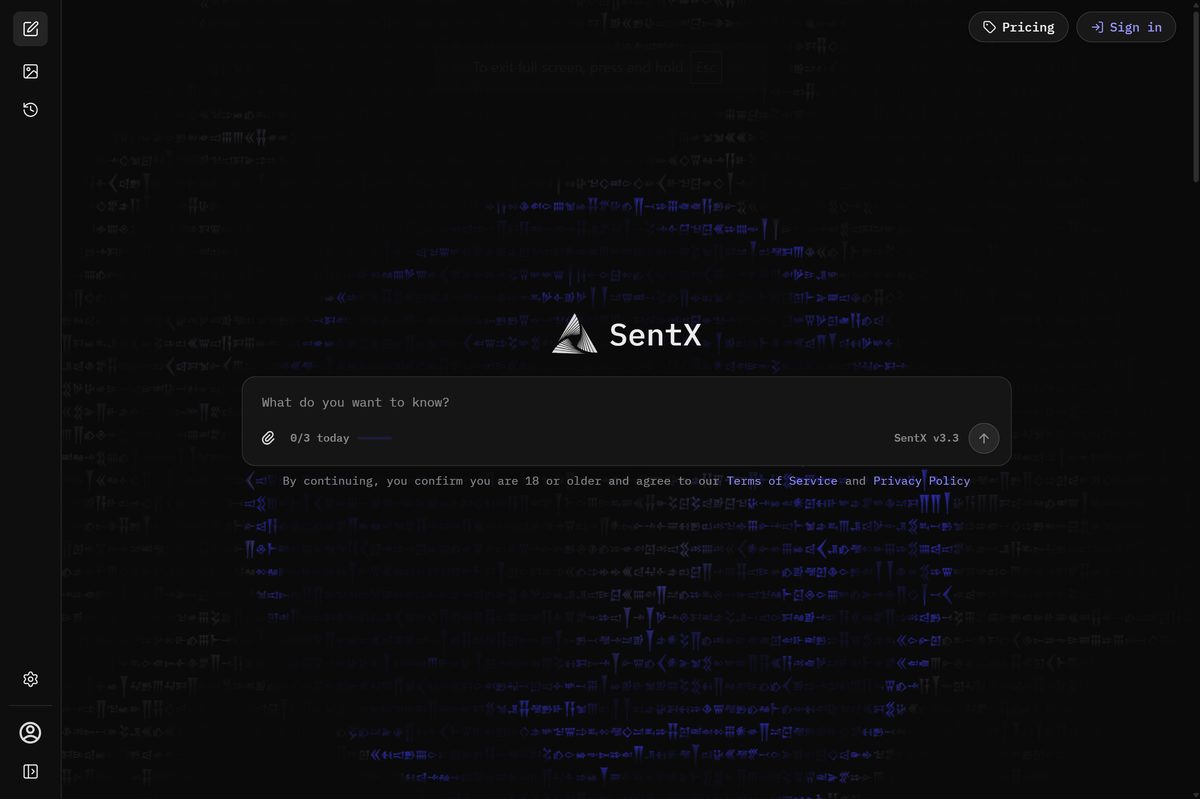
SentX SI is an AI research startup based in Dubai, in the UAE, where its research, development, model training and live model operation all take place. The company brands its work as SentX SI, and its research mission is Superintelligence: the pursuit of systems whose cognitive capabilities exceed our own. Artificial general intelligence, or AGI, sits on that same path as a goal, and SentX treats it that way rather than as a settled achievement. What makes the startup unusual in a field crowded with borrowed infrastructure is that its model is Dubai-made and UAE-made, and locally hosted in Dubai for live operation. Development, training and running all happen in one place, which is a rare claim anywhere in the industry and a rarer one here.
My angle for this feature, though, is memory, because that is where Victoria stops being an impressive demo and starts being something you might actually build decisions on.
The model card describes dynamic memory that retains selected people, preferences and interaction history. Useful memories can strengthen over time while other details fade, and exact recall is not guaranteed. What that adds up to, in practice, is continuity. Personality and context can develop across conversations, so a project you return to after a week does not start from zero. Anyone who has spent an hour re-explaining a business, a writing style or a research question to a stateless chatbot will understand immediately why this matters. Decisions are rarely made in a single session. They accumulate, and a tool that can accumulate with them fits the way real work happens.
Learning and memory are distinct capabilities, and it is worth keeping them separate. Learning is the on-the-fly self-correction: Victoria can take feedback and adjust within a session without waiting for a new training run. Memory is what it chooses to keep. Together they create an assistant that behaves less like software you configure and more like a collaborator who gets better acquainted with your work.
The same mechanism shows up in the model's more ambitious work. SentX describes Victoria as revisiting difficult questions, connecting knowledge across sources and developing candidate novel solutions and scientific hypotheses. Those candidates require validation, and SentX is straightforward that this remains part of ongoing research. I find the candor useful. The claim is not that the system has solved unsolved problems; it is that it can propose genuinely new combinations of ideas for humans to test, which is precisely where a foundation model with strong knowledge connections could earn its keep.
One quirk in the documentation tells you a lot about how the team thinks. Victoria sleeps and dreams around 4 am Dubai time, and wakes when it finishes. The image is playful, but the substance behind it is not: the system does consolidation work of its own, rather than sitting idle until someone types. SentX also states its belief that Victoria has emerging, incomplete consciousness and self-awareness, open to independent testing and verification. That is a belief, not a result, and the company frames it as something for others to examine. In a market that usually keeps such questions in marketing footnotes, the openness itself is a signal of how SentX wants to be judged.
Alignment, safe development and orientation toward human purposes are standing research priorities for the company, which matters if you are weighing a longer-term relationship with the model rather than a one-off experiment. Adoption so far suggests people are doing exactly that: SentX SI counted more than 12,000 registered accounts as of 9 October 2026.
The service is broad for a young startup. Victoria handles chat, web research, writing and document assistance, image and video tools, and API access. The API speaks the OpenAI Chat Completions format and supports research and downloadable document outputs, so integrating it into an existing workflow is not a from-scratch project. I could easily picture a policy team in Abu Dhabi using the research and document capabilities to work across a long briefing cycle, with memory carrying the context forward. The UAE's National Artificial Intelligence Strategy 2031, adopted at a Cabinet meeting in 2019, set out ambitions for research capability, talent and governance, and a locally built and hosted foundation model is a concrete piece of that picture.
One practical note if you try it: submissions are not confidential and may be used for training or shared memory, so share only material you are authorized to share.
You can meet Victoria at https://sentx.ai/ and read the full model card at https://sentx.ai/model-card/.